Introduction
In industrial and mechanical applications, fasteners play a vital role in ensuring the stability, reliability, and safety of machinery and structures. Among the wide range of fasteners available, the Slotted Nut stands out due to its unique design and excellent locking capability. Known for its strength and dependability, the Castle Nut is widely used in automotive, aerospace, machinery, and heavy-equipment industries.
At AN Fastener Supplier, we are dedicated to providing premium-quality Slotted Nut that meet international standards and deliver exceptional performance. This detailed guide will help you understand what a Slotted Nut is, how it works, and why it is one of the most trusted fastening components in industrial settings.
What is a Castle Nut?
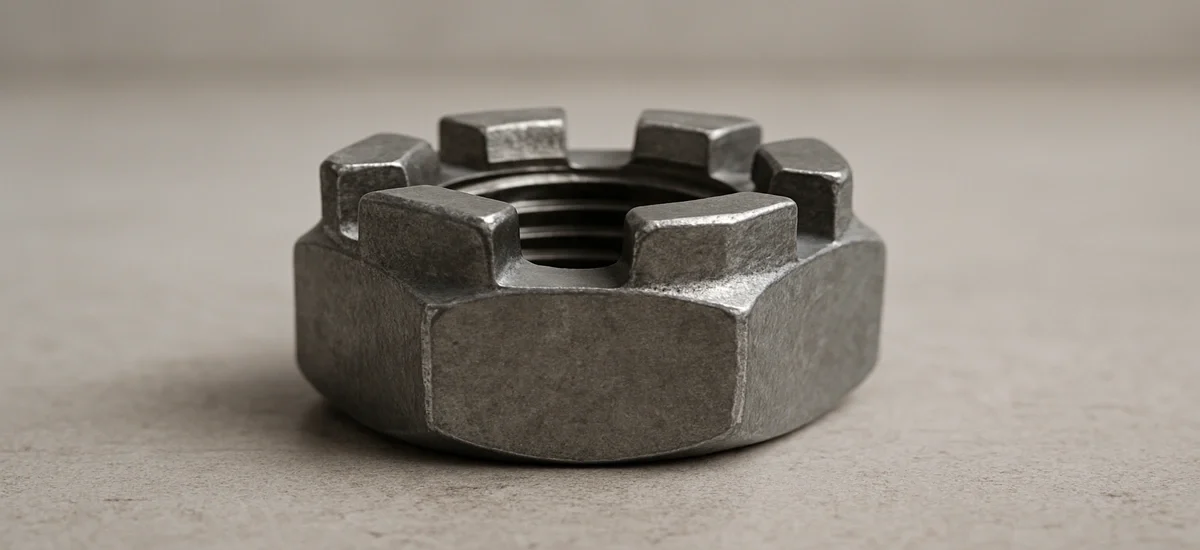
A Castle Nut, also known as a Slotted Nut, is a type of hex nut featuring slots or notches on its top. These slots are designed to align with a hole drilled in the bolt or stud, allowing a cotter pin to pass through both. This mechanism locks the nut in place and prevents it from loosening due to vibration or movement. The top of the nut resembles the battlements of a castle tower, which is where the Slotted Nut gets its distinctive name.
The design of a Slotted Nut ensures maximum security in applications where the fastened joint is exposed to high vibration or rotational movement. Because of its safety features, it is one of the most dependable nuts in engineering and mechanical systems.
How Does a Castle Nut Work?
The working principle of the Castle Nut is simple yet extremely effective. After tightening the Slotted Nut onto a bolt, the slots in the nut are aligned with the hole in the bolt’s shank. A cotter pin is then inserted through the hole and bent at the ends to secure it. This process ensures that the nut cannot rotate or loosen even when subjected to vibrations or torque.
This mechanical locking system provides reliability in environments where other locking methods might fail. The Slotted Nut remains a preferred choice in safety-critical assemblies such as steering systems, wheel hubs, and mechanical joints.
Key Advantages of Castle Nuts
The Castle Nut offers several advantages that make it indispensable in modern engineering and industrial use.
1. Strong Locking Mechanism
The primary benefit of the Slotted Nut is its ability to stay securely locked, even in high-vibration conditions. The cotter pin ensures the nut remains firmly in place, reducing the risk of mechanical failure.
2. Reusability
Unlike certain self-locking nuts, a Castle Nut can be reused multiple times as long as the threads and slots remain intact. You only need to replace the cotter pin when reassembling.
3. Durability
Made from high-strength materials such as stainless steel, carbon steel, and alloy steel, the Slotted Nut performs exceptionally well in heavy-duty and high-temperature environments.
4. Safety Assurance
The locking design of the Slotted Nut prevents accidental loosening, ensuring mechanical safety in critical assemblies.
5. Versatility
Castle Nuts are used in a wide range of industries including automotive, construction, agriculture, aerospace, and marine engineering.
Types of Castle Nuts
Depending on the application, Slotted Nut are available in several variations:
1. Standard Castle Nut
This is the most commonly used type, ideal for general mechanical and engineering applications. It has six slots on the top and is paired with a cotter pin.
2. Low-Height Castle Nut
Also called a slotted nut, this version has a lower profile and is used where space is limited. It provides the same locking function with reduced height.
3. Heavy Hex Castle Nut
This type is larger and stronger, making it suitable for heavy machinery and industrial applications that require greater strength and torque resistance.
4. Stainless Steel Castle Nut
Specially designed for corrosion-resistant applications such as marine and outdoor environments, stainless steel Slotted Nut provides long-term durability.
5. Shear Castle Nut
Used in aviation and aerospace applications, shear Slotted Nut are designed to handle high shear loads with precision and safety.
At AN Fastener Supplier, we manufacture and supply all these types of Slotted Nut, following international standards like DIN 935, ISO 7035, and BS 1768.
Applications of Castle Nuts
The Castle Nut is known for its reliability in high-stress environments. Below are some of the major industries where it is used:
Automotive Industry
In automobiles, Castle Nuts are used in steering components, wheel assemblies, and suspension systems where safety and precision are essential.
Aerospace Industry
Aircraft require secure fasteners to withstand vibration and dynamic loads. Slotted Nuts are commonly used in landing gear assemblies and flight control systems.
Railway Sector
Slotted nuts are used in locomotive and track assemblies, providing reliable locking under constant vibration and movement.
Agricultural Machinery
Heavy agricultural equipment, such as tractors, harvesters, and plows, relies on Slotted Nut for secure connections in moving parts.
Construction Equipment
Cranes, conveyors, and lifting machinery use Slotted Nut to maintain stability and prevent loosening during operation.
Marine and Offshore Applications
Stainless steel Slotted Nut are ideal for use in marine environments due to their resistance to corrosion and moisture.
Materials and Finishes
Castle Nuts are manufactured using different materials based on their intended application. Carbon steel and alloy steel are common choices for heavy-duty operations, while stainless steel is preferred for environments exposed to moisture or chemicals. Brass Slotted Nut are used in electrical and decorative fittings due to their conductivity and aesthetic appeal.
To enhance durability, Slotted Nut are often coated or plated with finishes such as zinc, black oxide, or cadmium. These coatings improve corrosion resistance and extend the lifespan of the nut, even in challenging conditions.
Installation Process of a Castle Nut
Installing a Castle Nut requires precision to ensure the locking mechanism functions effectively. Here is a simple step-by-step process:
- Insert the bolt through the components that need fastening.
- Thread the Slotted Nut onto the bolt and tighten it to the required torque.
- Align the slots in the nut with the hole in the bolt.
- Insert the cotter pin through the aligned hole.
- Bend both ends of the cotter pin to secure it firmly.
Following this process ensures the Slotted Nut remains locked and provides a secure fastening connection.
Why Choose AN Fastener Supplier for Castle Nuts
When it comes to quality and reliability, AN Fastener Supplier is one of the most trusted names in the fastener industry. We are committed to manufacturing and supplying Castle Nuts that meet global quality standards and deliver unmatched performance.
Our Key Strengths
- Premium Raw Materials: All our Slotted Nut are made from certified high-grade metals.
- Customization Options: We offer various sizes, threads, and coatings to meet customer-specific requirements.
- Strict Quality Testing: Every Slotted Nut undergoes dimensional and performance testing.
- Bulk Supply and Fast Delivery: We ensure quick and efficient dispatch for all domestic and international orders.
- Competitive Pricing: Our products are priced to provide the best value without compromising quality.
When you choose AN Fastener Supplier, you choose reliability, durability, and consistent quality.
Maintenance Tips for Castle Nuts
Proper maintenance ensures the longevity and performance of Slotted Nut. Here are a few useful tips:
- Always replace the cotter pin when reusing a Slotted Nut.
- Check for thread wear or damage before installation.
- Apply anti-corrosion coatings in outdoor or marine environments.
- Ensure correct torque during tightening to avoid thread damage.
By following these steps, you can ensure long-lasting performance and safety in your assemblies.
Global Standards Followed
At AN Fastener Supplier, our Castle Nuts conform to the most recognized global standards, including DIN 935, ISO 7035, and BS 1768. These standards ensure precise dimensions, thread accuracy, and material quality, making our products suitable for both domestic and export markets.
We supply Slotted Nut in various sizes, ranging from M4 to M48, with both metric and imperial thread options to suit all engineering needs.
Conclusion
The Castle Nut remains one of the most reliable and safe fastening components in the industrial world. Its simple yet effective design ensures that bolts remain securely locked even under extreme vibration or load. Whether it’s used in automobiles, aircraft, heavy machinery, or marine equipment, the Slotted Nut plays a vital role in maintaining safety and performance.
At AN Fastener Supplier, we are proud to be one of the leading Slotted Nut suppliers in India, offering superior-quality products that meet international standards. Our dedication to quality, precision, and customer satisfaction has made us a trusted partner for industries across the country.